AIA Health Happy
A lump-sum inpatient plan: one annual limit covers the room, the doctors, the drugs and the surgery rather than capping each of them separately. The simplest option to hold if you want private hospital treatment without doing arithmetic at the admissions desk.
Best suited to
- Working expats whose employer cover is thin or Thailand-only
- Anyone who wants to choose a private hospital without checking sub-limits
- People planning to stay in Thailand for several years or longer

What it covers
What it covers
The plan pays for inpatient treatment against a single yearly limit. That structure matters more than it sounds: older-style policies cap the room rate, the surgeon and the medication separately, and it is usually one of those sub-limits — not the headline number — that runs out first.
- Inpatient treatment against one annual limit
- Room, board and nursing care
- Surgery, procedures and physicians’ fees
- Follow-up treatment after discharge, per the policy terms
Things worth knowing before you apply
Health cover in Thailand is written as a rider on a life policy, so you take out both together. Premiums are age-banded and rise as you get older, and pre-existing conditions are assessed at application — which is the practical reason not to postpone.
Deductible versions cut the premium substantially and make sense if you already have employer cover for smaller claims. We will price both and show you the difference.
What it covers
What it covers
The plan pays for inpatient treatment against a single yearly limit. That structure matters more than it sounds: older-style policies cap the room rate, the surgeon and the medication separately, and it is usually one of those sub-limits — not the headline number — that runs out first.
- Inpatient treatment against one annual limit
- Room, board and nursing care
- Surgery, procedures and physicians’ fees
- Follow-up treatment after discharge, per the policy terms
Why it is written as a rider on a life policy
This surprises almost every foreigner who buys health cover in Thailand for the first time. You cannot buy a standalone medical policy here — it is issued as a rider attached to a life policy, and you take out both together.
This is a product regulation, not an upsell. In practice it means your premium has two components: the life policy, which usually accumulates a surrender value, and the health rider, which is pure risk cover for that year and accumulates nothing.
The rider premium is age-banded and steps up as you move into each new band. That is normal across every insurer, but it is worth seeing the full premium table to age 70 or 80 before you commit, rather than only the figure for this year. Ask for it — we provide it unprompted.
The deductible option is usually the best value decision
If you already have employer cover, or you are comfortable absorbing the first slice of a claim yourself, a deductible version cuts the premium substantially while leaving the top-end limit — the part that actually protects you — untouched.
The logic is that insurance is worth buying for the outcomes you cannot absorb, not the ones you can. A ฿40,000 admission is unpleasant; a ฿2 million cancer course is a different category of problem. A deductible plan is a deliberate choice to insure the second and self-fund the first.
We will price both structures side by side so you can see exactly what the deductible saves you per year, and decide whether that trade is right for you.
Direct billing is the part that matters at 2am
Direct billing is the part that matters at 2am
One of the strongest practical arguments for a Thai policy over a foreign one is direct billing. With a local plan, you present your insurance card at registration and the hospital settles with the insurer; you pay only what falls outside the cover.
With an overseas policy you generally pay in full and claim back. For an inpatient stay that can mean fronting a very large sum on a card, in a foreign country, at the worst possible moment — and then waiting weeks for reimbursement.
Before you buy, check which hospitals near you the insurer bills directly. Do it now, not in an emergency. We will confirm it in writing for the hospital you would actually go to.
Disclosure: the single thing that voids more claims than anything else
In our experience, claims fail far more often over non-disclosure than over exclusions or limits. Most of it is not deliberate — people genuinely forget a course of medication five years ago, or assume a one-off abnormal result was too minor to mention.
It is not minor. Insurers can and do review medical history when a large claim is submitted, and an undisclosed condition can undermine the whole policy, not merely the claim relating to it.
Our advice is blunt: declare everything you can remember, including things you think are irrelevant. If the result is an exclusion on one condition, you still have a policy that works for everything else. That is a far better position than a policy that looks comprehensive and fails when you need it.
Common questions
Can I keep my home-country policy instead?
You can, but check three things: whether it covers you as a resident rather than a traveller, whether it renews indefinitely regardless of age, and whether any Thai hospital will bill it directly. Most people find at least one of those answers is no.
Am I covered immediately?
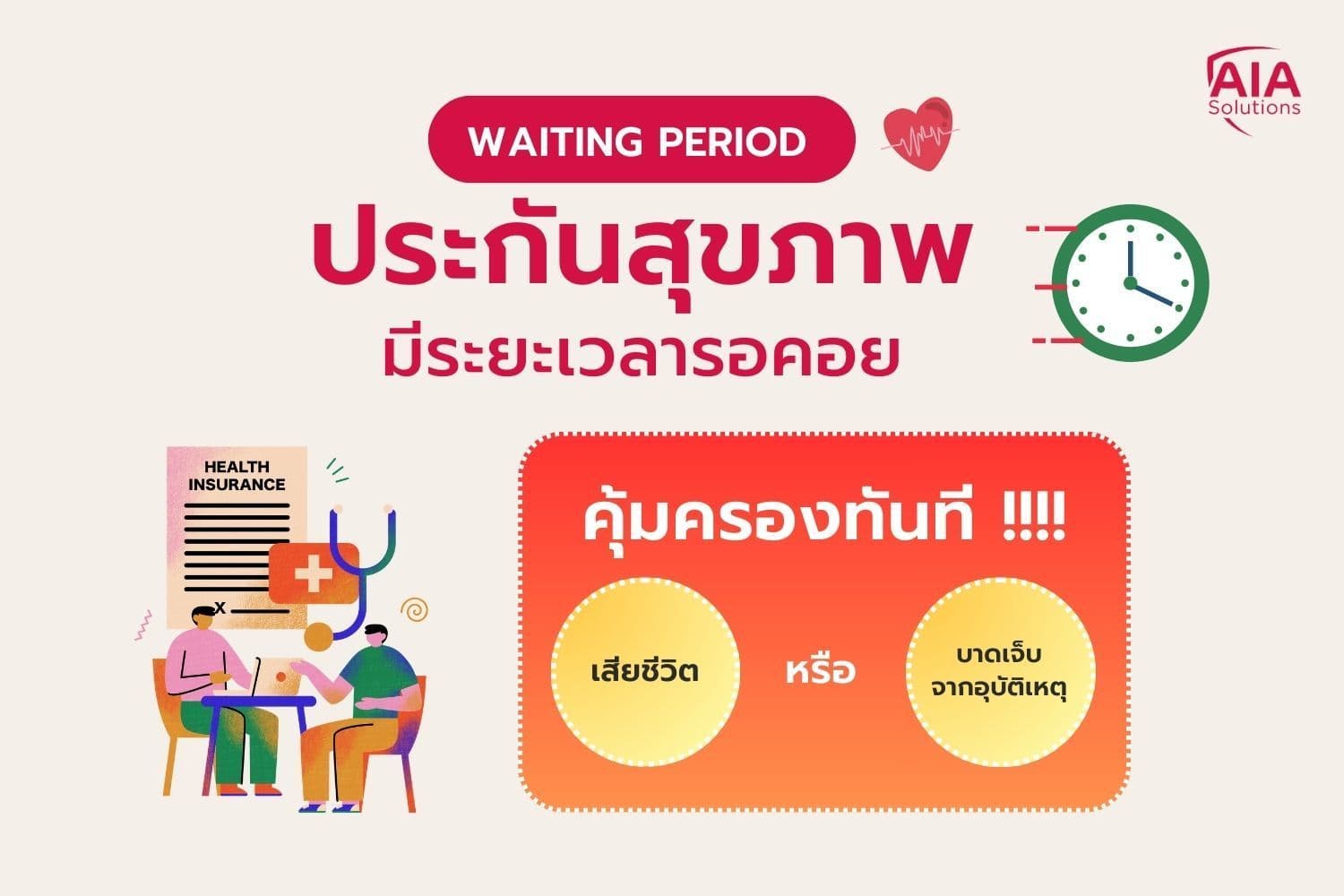
No. There is an initial period during which illness is not covered, and longer waiting periods for specific conditions such as tumours, hernias and cataracts. Accidents are generally covered as soon as the policy is in force. The exact periods are in the policy and we will point at them before you apply.
What happens to my policy if I leave Thailand?
This is an important question to ask before you buy, because the answer varies. A Thai policy is designed around treatment in Thailand, and cover outside the country depends on the plan and region you select. If there is a realistic chance you will relocate, tell us at the outset and we will factor it in.
Does it cover pregnancy?
Maternity is treated separately from ordinary medical cover and is subject to its own conditions and waiting periods, where it is available at all. If you are planning a family, raise it early — the waiting periods mean this is one to arrange well in advance.


